
Fairs & Festivals of Himachal Pradesh
Himachal Pradesh is a land of cultural diaspora! Words fail to define the mixture of different cultures one can see here. For the people of Himachal Pradesh, every day is nothing less than a celebration or jubilation. The festivals vary in terms of scale but most of them are attended by huge crowds who want to carry forward the rich legacy and rituals of their ancestors.Every monastery, temple, church, gurudwara stages its own celebration, featuring parades
of deities in gleaming golden silver canopies, performance of traditional dances like mask
dance, thrilling adventure activities and ritual dramas. In Himachal Pradesh, every festival
is celebrated in peace or by dancing the hours away in carefree abandonment. There
are so many cultural festivals in Himachal Pradesh that it is really hard to pick some.
Halda festival – Welcome the New YearDedicated to the goddess of wealth, Shashikar Apa, Halda festival is celebrated with greatzeal and enthusiasm in order to celebrate the new year. The actual date Lahaul districts come together and enjoy their new year by performing music.Lamas also of the celebration is decided by the Lamas. People ofchoose a different site to execute an old ritual as per which, every householdcarries few branches of a cedar tree to perform a bonfire. The bonfire signifies the unity of the community. It is more popular in the valleys of Keylong, River Chandra and River Bhaga.

- When: January
- Where: Lahaul district
- Special Attraction: Dancing Acts, Musicals
- Duration of Festival: 2 Days
The most awaited festival of Himachal Pradesh, Sazo is celebrated to bid adieu to the village
deities. During the festival, the doors of the temples remain closed, but the wagons of god and
goddesses remain open. It is believed that on this day, various deities abode to heaven for a short
nap. The ritual signifies that God showers good things from heaven on its devotees. Therefore,
the village people clean and polish the floors of the temples to receive God's blessings.
Throughout the festival, villagers are filled with joy and ecstasy.On this day, priests of the
temples are deeply revered as they are considered as the representative of the deity. In some
villages, priests of the temple go from one house to another just to sniff the incense. Villages
give the priest a cordial reception; as a regard they also gift them food grains and gifts, a small
ritual known as the Deacher and Deokhel. Poltus, Rice, Pulses, Vegetables, Meat, Halva, Chilta
are some of the dishes prepared by the villagers on this occasion.
deities. During the festival, the doors of the temples remain closed, but the wagons of god and
goddesses remain open. It is believed that on this day, various deities abode to heaven for a short
nap. The ritual signifies that God showers good things from heaven on its devotees. Therefore,
the village people clean and polish the floors of the temples to receive God's blessings.
Throughout the festival, villagers are filled with joy and ecstasy.On this day, priests of the
temples are deeply revered as they are considered as the representative of the deity. In some
villages, priests of the temple go from one house to another just to sniff the incense. Villages
give the priest a cordial reception; as a regard they also gift them food grains and gifts, a small
ritual known as the Deacher and Deokhel. Poltus, Rice, Pulses, Vegetables, Meat, Halva, Chilta
are some of the dishes prepared by the villagers on this occasion.

- When: January
- Where: Kinnaur
- Special Attraction: Dancing Acts, Musicals
- Duration of Festival: 1 Day
Lohri is a feisty festival celebrated by the people of Himachal Pradesh, Haryana and Punjab. In
the villages of Punjab, Lohri is celebrated as a ceremonial ritual to jumpstart the harvesting of
Rabi crop. Lohri festival is famous by the name of Maghu as well because it coincides with the
onset of 'Magh' month which commences just a day before.On this festival, people dress in
vibrant clothes and prepare dance performances. Children sing folk songs and go door to door
, especially to the newly married couples consciously to collect funds for community bonfire.
Around dusk, people from different households come together and lit a bonfire. People throw
pop cans and puffed rice in the flames as a way of offering sacrifice to God so that they get
blessed with a rich harvest. People from different communities come together for the grand
holy celebration. On the whole, Lohri celebrates oneness and encourages people to rise above
personal differences.
the villages of Punjab, Lohri is celebrated as a ceremonial ritual to jumpstart the harvesting of
Rabi crop. Lohri festival is famous by the name of Maghu as well because it coincides with the
onset of 'Magh' month which commences just a day before.On this festival, people dress in
vibrant clothes and prepare dance performances. Children sing folk songs and go door to door
, especially to the newly married couples consciously to collect funds for community bonfire.
Around dusk, people from different households come together and lit a bonfire. People throw
pop cans and puffed rice in the flames as a way of offering sacrifice to God so that they get
blessed with a rich harvest. People from different communities come together for the grand
holy celebration. On the whole, Lohri celebrates oneness and encourages people to rise above
personal differences.

- When: 13th January
- Where: All over Himachal
- Special Attraction: Bonfire, dancing acts
- Duration of Festival: 1 Day
To promote the culture of Himachal Pradesh, a winter carnival is organized every year in Manali.
Himachal Pradesh started the trend of Winter Carnival back in 1977 and now after almost three
decades the festival has become bigger and better! During this festival, the ski slopes of Manali
are invaded by adventure enthusiasts. Another major highlight of the festival is the beauty
contest known as the "Winter Queen" and "Mr. Manali"A procession is also organized from the
Hadimba Devi temple. The complete stretch of Manali mall road looks like a carnival. Right
from folk dance to entertaining skits, a lot of things can be explored in this festival. People on
a tour to Himachal Pradesh can't afford to miss the Himachal Winter Carnival. Other than
enjoying the Himachal Winter Carnival in Manali, tourists have an opportunity to visit The
Manacle Gompa, Vashisht Springs, Jagatsukh, Manu Temple and Hadimba Temple.
Himachal Pradesh started the trend of Winter Carnival back in 1977 and now after almost three
decades the festival has become bigger and better! During this festival, the ski slopes of Manali
are invaded by adventure enthusiasts. Another major highlight of the festival is the beauty
contest known as the "Winter Queen" and "Mr. Manali"A procession is also organized from the
Hadimba Devi temple. The complete stretch of Manali mall road looks like a carnival. Right
from folk dance to entertaining skits, a lot of things can be explored in this festival. People on
a tour to Himachal Pradesh can't afford to miss the Himachal Winter Carnival. Other than
enjoying the Himachal Winter Carnival in Manali, tourists have an opportunity to visit The
Manacle Gompa, Vashisht Springs, Jagatsukh, Manu Temple and Hadimba Temple.

- When: 2nd January to 6th January
- Where: Manali
- Special Attraction: Skiing Championship, Himachali Food Festival, Craft Bazaar, Local Band Competition, Folk Dances, Street Plays, and Adventure Sports.
- Duration of Festival: 1 Day
The New Year celebration of Tibetans, Losar festivals takes place in the first week of the first
lunar month (February), with performances of Tibetan opera and prayer ceremonies being held
at various monasteries. A day prior to the New Year, Nyi Shu GU is celebrated which is a
ritualistic tradition. Special noodles called Thukpa Bhatuk are consumed on this day
(Nyi Shu GU). During this festival, the local deity is worshipped. It is also believed that the
Losar festival originated during the Pre-Buddhist period in Tibet when Bon was the religion
followed in the country.The First day of the festival is known as the 'Lama Losar' or the festival
of the Guru and His Holiness The Dalai Lama', the spiritual head of the Tibetans is worshiped on
this day. During the festival, Chaam dance is performed which features elaborated mask and
costumes. The dance presents the story of how the cruel Tibetan king, known by the name of
Langdarma, was killed in the 9th century, leading to the ultimate triumph of good over evil.
The weird masks used in the dance have also earned it the name the 'Devil Dance'.
lunar month (February), with performances of Tibetan opera and prayer ceremonies being held
at various monasteries. A day prior to the New Year, Nyi Shu GU is celebrated which is a
ritualistic tradition. Special noodles called Thukpa Bhatuk are consumed on this day
(Nyi Shu GU). During this festival, the local deity is worshipped. It is also believed that the
Losar festival originated during the Pre-Buddhist period in Tibet when Bon was the religion
followed in the country.The First day of the festival is known as the 'Lama Losar' or the festival
of the Guru and His Holiness The Dalai Lama', the spiritual head of the Tibetans is worshiped on
this day. During the festival, Chaam dance is performed which features elaborated mask and
costumes. The dance presents the story of how the cruel Tibetan king, known by the name of
Langdarma, was killed in the 9th century, leading to the ultimate triumph of good over evil.
The weird masks used in the dance have also earned it the name the 'Devil Dance'.

- When: Between the months of January end and March
- Where: Throughout Himachal
- Special Attraction: Mask Dance
- Duration of Festival: 15 days
Doongri festival or Hadimba Devi fair is celebrated in Kullu in honor of and to celebrate
Hadimba Devi’s (wife of Bhima) birthday. A huge fair is organized on this day; during the
festival one can catch glimpses of dance and musical performances by local artists. Since the
festival is celebrated on ‘Basant Panchami’, one can see colourful flowers blooming on Kullu
valley. Moreover, little colorful kites also cover the skies to mark the spring festival, termed
as “Basant Panchami.” Freshness, aroma, and vibrancy of flowers all around the valley gives
the tourist the most blissful time of their lives.
Hadimba Devi’s (wife of Bhima) birthday. A huge fair is organized on this day; during the
festival one can catch glimpses of dance and musical performances by local artists. Since the
festival is celebrated on ‘Basant Panchami’, one can see colourful flowers blooming on Kullu
valley. Moreover, little colorful kites also cover the skies to mark the spring festival, termed
as “Basant Panchami.” Freshness, aroma, and vibrancy of flowers all around the valley gives
the tourist the most blissful time of their lives.

- When: May
- Where: Kullu
- Special Attraction: Folk dance and music performances by the local artist
- Duration of Festival: 1 Day
Maha Shivratri is celebrated in the month of February with great zeal and enthusiasm. Shivratri
was the day when Lord Shiva married Goddess Parvati. Maha Shivaratri literally means ‘The
Night of Shiva.' All the religious ceremonies and celebrations take place during the night.
During the daytime, people make sculptures of the main deity Shiva and Parvati with the help
of cow dung or earthen soil. A 3 day fair called Mandi International Maha Shivratri Festival is
organized in Mandi, a small town of Himachal Pradesh.
was the day when Lord Shiva married Goddess Parvati. Maha Shivaratri literally means ‘The
Night of Shiva.' All the religious ceremonies and celebrations take place during the night.
During the daytime, people make sculptures of the main deity Shiva and Parvati with the help
of cow dung or earthen soil. A 3 day fair called Mandi International Maha Shivratri Festival is
organized in Mandi, a small town of Himachal Pradesh.

- When: February or March
- Where: Throughout Himachal
- Special Attraction: Folk music, dance, trade of general commodities
- Duration of Festival: 1 Day
A grand celebration called International Maha Shivratri Festival is organized by Mandi. Since
the temple is home to 81 temples of Lord Shiv, Mandi sees footfall of more than 200 devotees
on the day of Shivratri. The festival is also known as a Mandi Shivratri festival. During the
festival, a colorful procession called Shobha Yatra is organized as per which various deities are
carried in their chariots to Mandi to pay homage to Madho Rai and the Raja. As per the old
ritual, it is mandatory that every deity who visits Mandi should visit Madho Rai temple first in
order to pay respect to Lord Vishnu and then honor the ruler. Consequently, the deity pays
obeisance to Lord Shiv at Bhootnath temple where the main festival is organized. The entire
procession is swayed by drums and folk music to indicate happiness.Shivratri is the time when
local businessman indulge in trading activities of products like walnut, ghee (butter oil), honey
opium and general merchandise. On the second day, Jagaran is organized. On this occasion, a
guru and his disciple make prophesies for the following year. On the last day, prayers are chanted and ‘chadars’ are offered in the temple.
the temple is home to 81 temples of Lord Shiv, Mandi sees footfall of more than 200 devotees
on the day of Shivratri. The festival is also known as a Mandi Shivratri festival. During the
festival, a colorful procession called Shobha Yatra is organized as per which various deities are
carried in their chariots to Mandi to pay homage to Madho Rai and the Raja. As per the old
ritual, it is mandatory that every deity who visits Mandi should visit Madho Rai temple first in
order to pay respect to Lord Vishnu and then honor the ruler. Consequently, the deity pays
obeisance to Lord Shiv at Bhootnath temple where the main festival is organized. The entire
procession is swayed by drums and folk music to indicate happiness.Shivratri is the time when
local businessman indulge in trading activities of products like walnut, ghee (butter oil), honey
opium and general merchandise. On the second day, Jagaran is organized. On this occasion, a
guru and his disciple make prophesies for the following year. On the last day, prayers are chanted and ‘chadars’ are offered in the temple.

- When: February or March
- Where: Mandi
- Special Attraction: Folk music, dance, trade of general commodities
- Duration of Festival: 3 Days
Nalwari Fair
Celebrated with great pomp and show since colonial times, Nalwari fair is a great platform for
all the cattle traders to meet and do business. The festival was started by W. Goldstein, who was
the superintendent of Shimla in 1889. He was so impressed with the breed of cattle produced in
Himchal Pradesh that he decided to organize a fair where cattle could be bought and sold here.
The prime attraction of the Nalwari Festival is the Bullock trade. This week long festival attracts
traders, business men and tourist from all across India. Nalwari Festival is the time when
shopaholics can grab some interesting local artifacts like jewelry, paintings and local folk art.
A wrestling match is also organized during the festival.
all the cattle traders to meet and do business. The festival was started by W. Goldstein, who was
the superintendent of Shimla in 1889. He was so impressed with the breed of cattle produced in
Himchal Pradesh that he decided to organize a fair where cattle could be bought and sold here.
The prime attraction of the Nalwari Festival is the Bullock trade. This week long festival attracts
traders, business men and tourist from all across India. Nalwari Festival is the time when
shopaholics can grab some interesting local artifacts like jewelry, paintings and local folk art.
A wrestling match is also organized during the festival.
- When: 17th March to 23rd March
- Where: Bilaspur
- Special Attractions: Wrestling Match, Musical Events, Shopping of local art, Cattle trading
- Duration of Festival: 7 Days
Baisakh/ Vaisakhi
Baisakh or Vaisakhi is marked as the end of the winter season as per the agrarian tradition. The
festival is celebrated with great pomp and show in Rewalsar, Prashar Lake near Mandi and
Tattapanii near Shimla. Fairs are organized in every nook and corner of Himachal Pradesh.
Wrestling, dancing and archery competitions are the main attractions of the festival.
festival is celebrated with great pomp and show in Rewalsar, Prashar Lake near Mandi and
Tattapanii near Shimla. Fairs are organized in every nook and corner of Himachal Pradesh.
Wrestling, dancing and archery competitions are the main attractions of the festival.
In Kangra, a small clay model of Rali is made in every house to mark the day. Fairs by different
names are organized in various places of Himachal Pradesh- Sui Mela in Chamba, Maha Naug
Festival in Mandi, Markandaya fair in Bilaspur, and Rohru Jatra in Shikhru.
names are organized in various places of Himachal Pradesh- Sui Mela in Chamba, Maha Naug
Festival in Mandi, Markandaya fair in Bilaspur, and Rohru Jatra in Shikhru.
- Where: All across Himachal Pradesh
- When 13th or 14th of April
- Special Attraction: Baisakhi fair, folk dance performances; Wrestling, archery and dancing competition
- Duration of Festival: 1 Day
Spring Festival
Spring festival, which is also called Pipal Jatra or Basantotsav, takes place in Kullu from 28th to
30th April. The tradition of celebrating the festival began long back when kings used to rule
Himachal Pradesh. The festival marks the beginning of the spring season in the valley. It is said
that during the bygone era, rulers used to sit under the papal tree to enjoy the traditional dances.
As the time rolled by, the festival has lost much of its glory and glitters. During the festival,
cultural performances are organized by Kala Kendra in amphitheatres. Cultural groups and
reputed artists come from all over India to perform in the festival.
30th April. The tradition of celebrating the festival began long back when kings used to rule
Himachal Pradesh. The festival marks the beginning of the spring season in the valley. It is said
that during the bygone era, rulers used to sit under the papal tree to enjoy the traditional dances.
As the time rolled by, the festival has lost much of its glory and glitters. During the festival,
cultural performances are organized by Kala Kendra in amphitheatres. Cultural groups and
reputed artists come from all over India to perform in the festival.

- Where: Kullu
- When: 28th to 30th April
- Special Attractions: Cultural performances
- Duration of Festival: 3 Days
Rakhidumni (Rakhi) Festival
Rakhidumni or Rakhi is celebrated on the full moon day in the monsoon month of Bhadrapad.
The festival is celebrated to acknowledge the emotional bond of brother and sister. On this day,
every sister ties a thread on her brother’s writs, which acts as a bond of protection. Rakhi
signifies that a brother will protect his sister from all the evil of the world. The sacred thread
remains on the wrist of the brothers for the entire month and when the Sairi festival comes,
threads are removed and offered to Mother Sairi.
The festival is celebrated to acknowledge the emotional bond of brother and sister. On this day,
every sister ties a thread on her brother’s writs, which acts as a bond of protection. Rakhi
signifies that a brother will protect his sister from all the evil of the world. The sacred thread
remains on the wrist of the brothers for the entire month and when the Sairi festival comes,
threads are removed and offered to Mother Sairi.
On this day, sisters pray for the long life of their brothers. In many parts of Himachal Pradesh,
Rakhi is known by the name Kajri Navami or Kajri Purnima. This is the time when Goddess
Bhagwati is worshipped. The festival is also known by different names-Vish Tarak
(destroyer of Venom), Punya Pradayak (bestower of boons) and Pap Nashak (the destroyer of
sins). This is the time when all the people of the family come together and share a good time
with each other.
Rakhi is known by the name Kajri Navami or Kajri Purnima. This is the time when Goddess
Bhagwati is worshipped. The festival is also known by different names-Vish Tarak
(destroyer of Venom), Punya Pradayak (bestower of boons) and Pap Nashak (the destroyer of
sins). This is the time when all the people of the family come together and share a good time
with each other.
- Where: All across Himachal Pradesh.
- When: August or September
- Duration of Festival: 1 Day
Phulaich Festival
Phulaich means ‘the festival of flowers’ and as per Hindu calendar it is organized in the month
of Bhadrapada. The festival is associated with the blooming of flowers in the Kinnaur valley.
On this day, local villagers go to the mountains to collect Ladra flowers swayed by playing
drums. The festival is organized as an act of remembering the ones passed away. Relatives offer
rice, wine and food to the deceased ones, which later are distributed amongst the poor. Later,
villagers go to visit the Dhangaspa family house and show their respect by garlanding the
members of the family. A true reflection of Hilly culture can be seen in the colourful
celebration process.
of Bhadrapada. The festival is associated with the blooming of flowers in the Kinnaur valley.
On this day, local villagers go to the mountains to collect Ladra flowers swayed by playing
drums. The festival is organized as an act of remembering the ones passed away. Relatives offer
rice, wine and food to the deceased ones, which later are distributed amongst the poor. Later,
villagers go to visit the Dhangaspa family house and show their respect by garlanding the
members of the family. A true reflection of Hilly culture can be seen in the colourful
celebration process.

- When: September
- Where: Kinnaur
- Special Attraction: Cultural practices
- Duration of Festival: 7 Days
Ladarcha Festival / La Darcha Fair
If tourists want to catch the glimpses of vibrant hilly culture of Himachal Pradesh then they
should attend the La Darch festival. The festival is organized to strengthen the commercial
bond between India and Tibet. The fair attracts many regional traders, local inhabitants, and
tourist from across the world. The festival was abandoned in the year 1962 because of China
war, but it was started again in the year 1980. The main attraction of the festival are folk song
and dance performances by artists from the Tibetan Institute of Performing Art, Bhutan, Ladakh,
Sikkim, Kinnaur and Nepal.
should attend the La Darch festival. The festival is organized to strengthen the commercial
bond between India and Tibet. The fair attracts many regional traders, local inhabitants, and
tourist from across the world. The festival was abandoned in the year 1962 because of China
war, but it was started again in the year 1980. The main attraction of the festival are folk song
and dance performances by artists from the Tibetan Institute of Performing Art, Bhutan, Ladakh,
Sikkim, Kinnaur and Nepal.
Traders from Kullu, Lahaul and Kinnaur districts gather here during this festival. Many items
are traded like accessories, utensils, apparel, jewelry, metalwork, plastic goods, craft, dry fruits,
grains and even livestock- yaks and pure blood horses. The festival is organized with a purpose
to promote friendship and cultural understanding amongst the people living in Himalayan region.
are traded like accessories, utensils, apparel, jewelry, metalwork, plastic goods, craft, dry fruits,
grains and even livestock- yaks and pure blood horses. The festival is organized with a purpose
to promote friendship and cultural understanding amongst the people living in Himalayan region.
Special attractions of the festival are Chaam and Buchan dance, special Buddhist sermons
and archery competition. The calm and serene valley of Kaza is transformed into a bustling
carnival during the festival.
and archery competition. The calm and serene valley of Kaza is transformed into a bustling
carnival during the festival.
- When: 3rd week of August
- Where: Kaza, Spiti
- Special Attraction: Folk dance, cultural programmes, special Buddhist sermons (large community
- meals)
- Duration of Festival: 3 Days
Kullu Dussehra
Dussehra celebration in Kullu is not at all similar to celebration in other parts of the country as
no figurine of Ravan or Kumbhkarna is burned. The traditional Kullu Dussehra is organized in
the month of October and gets off a spectacular start with the traditional procession of Lord
Raghunathji. The Rath Yatra of the idol of Lord Ragunath is led by the Kullu Raja and village
deities, and is known as the running of the Gods. Lord Raghunathji saddled on a gaily attired
chariot is pulled from its fixed place in Dhalpur Maidan to another spot across the Maidan by
big ropes. The pulling of ropes is regarded sacred by the local people. All the deities from
various temples are brought from the temple to the foreground in order to pay homage to
Raghnathji. Here one can see one of the most spectacular processions in the country as well as
the state; it attracts a huge number of tourists.
no figurine of Ravan or Kumbhkarna is burned. The traditional Kullu Dussehra is organized in
the month of October and gets off a spectacular start with the traditional procession of Lord
Raghunathji. The Rath Yatra of the idol of Lord Ragunath is led by the Kullu Raja and village
deities, and is known as the running of the Gods. Lord Raghunathji saddled on a gaily attired
chariot is pulled from its fixed place in Dhalpur Maidan to another spot across the Maidan by
big ropes. The pulling of ropes is regarded sacred by the local people. All the deities from
various temples are brought from the temple to the foreground in order to pay homage to
Raghnathji. Here one can see one of the most spectacular processions in the country as well as
the state; it attracts a huge number of tourists.
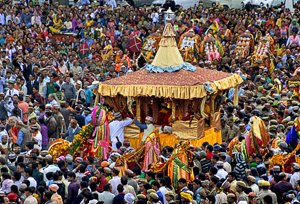
Dhalpur Maidan for a week in order to pay obeisance to Lord Raghunathji, the presiding deity.
The festival is celebrated with complete fevours for a week. This Hindu festival is celebrated all
over India to mark the triumph of good over evil (Lord Ram over Ravan). On the last day of the
festival, the chariot of Raghunath ji is taken to the bank of the river Beas. Then a heap of wood
along with grass is set on fire, symbolizing the burning of effigies of Ravana, the demon of
Lanka, and is followed by the sacrifice of chosen animals.
- Where: Kullu
- When: November or October
- Duration of Festival: 1 Day
International Himalayan Festival
The international Himalayan festival is celebrated in the Kangra district of Himachal Pradesh to
commemorate the occasion when His Holiness The Dalai Lama was awarded Nobel Peace prize
in the year 1985. The festival holds a special significance as it symbolizes the peace initiative.
Indo-Tibetan Friendship Society along with the Central Tibetan Administration and Himachal
Pradesh Tourism sponsors the Global Himalayan Festival.
commemorate the occasion when His Holiness The Dalai Lama was awarded Nobel Peace prize
in the year 1985. The festival holds a special significance as it symbolizes the peace initiative.
Indo-Tibetan Friendship Society along with the Central Tibetan Administration and Himachal
Pradesh Tourism sponsors the Global Himalayan Festival.
International Himalayan Festival lasts for three days in McLeodganj. Different stalls in the
festival showcase the culture, handicrafts, traditional medicines, and cuisines of the Himalayan
region. The festival acts as an initiative to strengthen harmony between the inhabitants of
Himachal Pradesh and Tibetans.
festival showcase the culture, handicrafts, traditional medicines, and cuisines of the Himalayan
region. The festival acts as an initiative to strengthen harmony between the inhabitants of
Himachal Pradesh and Tibetans.
- When: 2nd week of December
- Where: Kangra valley
- Special Attractions: Ctural Programmes, Art
- Duration of Festival: 3 Days
Ice Skating Carnival
To one's astonishment, Shimla is home to the biggest natural ice skating rink in Asia. That is
why it is just the right place to host Ice Skating Carnival. Being in close proximity to Pierre
Panjar, Dhauladar, Shivalik and Himalayas, the city is blessed with the perfect weather to
conduct full-fledged winter sports for visiting tourists. Ice Skating Carnival is a managed by the
Skating club of Shimla, which has been successfully running the program for over 60 years.
The carnival is celebrated with a lot of pomp and splendour in Himachal Pradesh and has a huge
influx of visitors each year.
why it is just the right place to host Ice Skating Carnival. Being in close proximity to Pierre
Panjar, Dhauladar, Shivalik and Himalayas, the city is blessed with the perfect weather to
conduct full-fledged winter sports for visiting tourists. Ice Skating Carnival is a managed by the
Skating club of Shimla, which has been successfully running the program for over 60 years.
The carnival is celebrated with a lot of pomp and splendour in Himachal Pradesh and has a huge
influx of visitors each year.
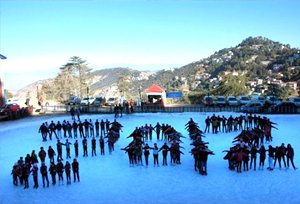
prominent sports which can be played here. Other than sports, various recreational activities like
fancy dress and dance competition are organized side by side.
- Where: Dalhousie or Shimla
- When: From December to February
- Duration of Festival: 3 Months
This is the home of God, a place where the snow sets and the oldest democracy in the world
rests!
rests!
There’s no other place in India which celebrate festivals as enthusiastically as
Himachal Pradesh. Enjoy the colour and drama of Himachal Pradesh’s festive pageantry.
Himachal Pradesh. Enjoy the colour and drama of Himachal Pradesh’s festive pageantry.


![6 Famous people Of Bishop Cotton School[BCS], Shimla](https://blogger.googleusercontent.com/img/b/R29vZ2xl/AVvXsEgKw0-pxv4dbgRMpkunez2ac-fki0OA6_7ZUl-rK8aSYJx-IZdj2Z7kHEON-eLu4HrAbCqHx29Y1X7whYOqOVxd4MiTnZPFyek2KQ8ItiGPjvEKBB01HItYexl-sKPQudmzolXQBZ7JDMpI/s72-c/Virbhadra-Singh.jpg)


Nice description of main festivals,
ReplyDeleteThank you so much👍👍